
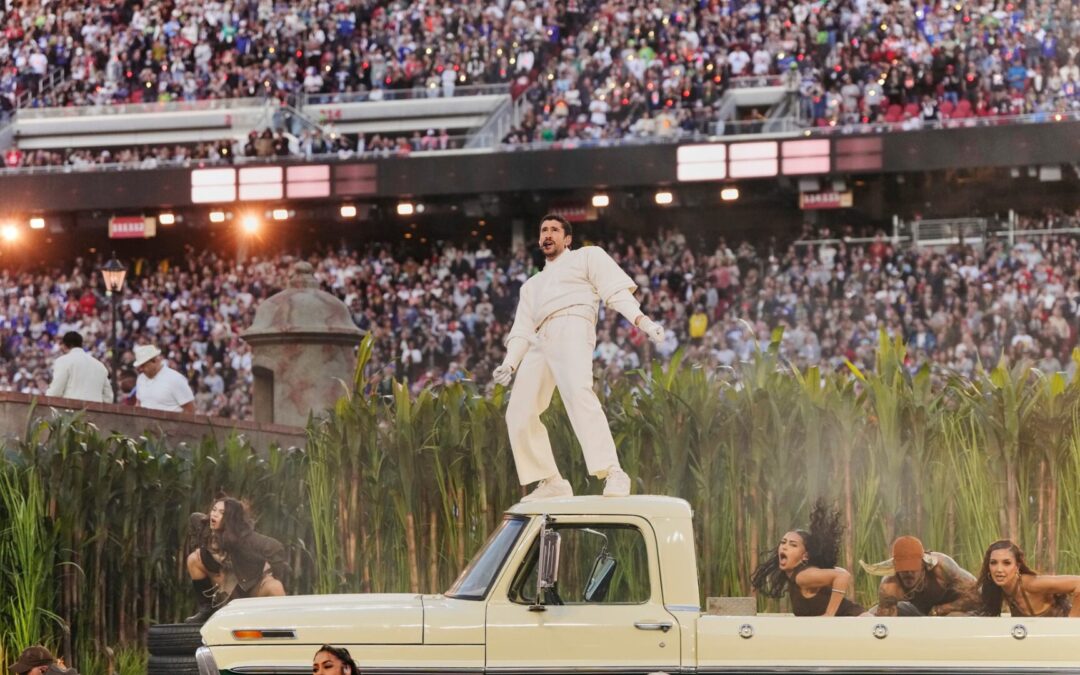
Bad Bunny transformed the Super Bowl halftime stage into a celebration of identity, heritage, and global sound, delivering one of the most culturally layered performances in the event’s history. The show opened not with fireworks, but with imagery rooted in labor and land: a cinematic sequence of coconut harvesting in Puerto Rico played across massive screens, accompanied by a headline in Spanish and a farmworker’s voice declaring, “Qué rico es ser latino” (How cool it is to be Latin). Seconds later, the first notes of “Tití Me Preguntó” rang out and the stadium erupted. The agricultural visuals spilled onto the field itself, recreated through choreography and set design as dancers, many disguised as towering sugarcane plants, moved across a stage transformed into a living Caribbean landscape.
Bad Bunny emerged in an all-white suit emblazoned with OCASIO across the back an elegant nod to NFL jersey typography filtered through his own formal aesthetic, while the set pulsed with everyday Puerto Rican life. Vendors rolled through offering visuals of cherished street snacks like piraguas, coco frío, and Villa tacos, while boxers trained ringside in tribute to the island’s legendary champions. Elsewhere, older men played dominoes and board games, reflecting the island’s cherished pasatiempos. From the opening seconds, the performance made its mission unmistakable: this was culture presented not as decoration, but as foundation.
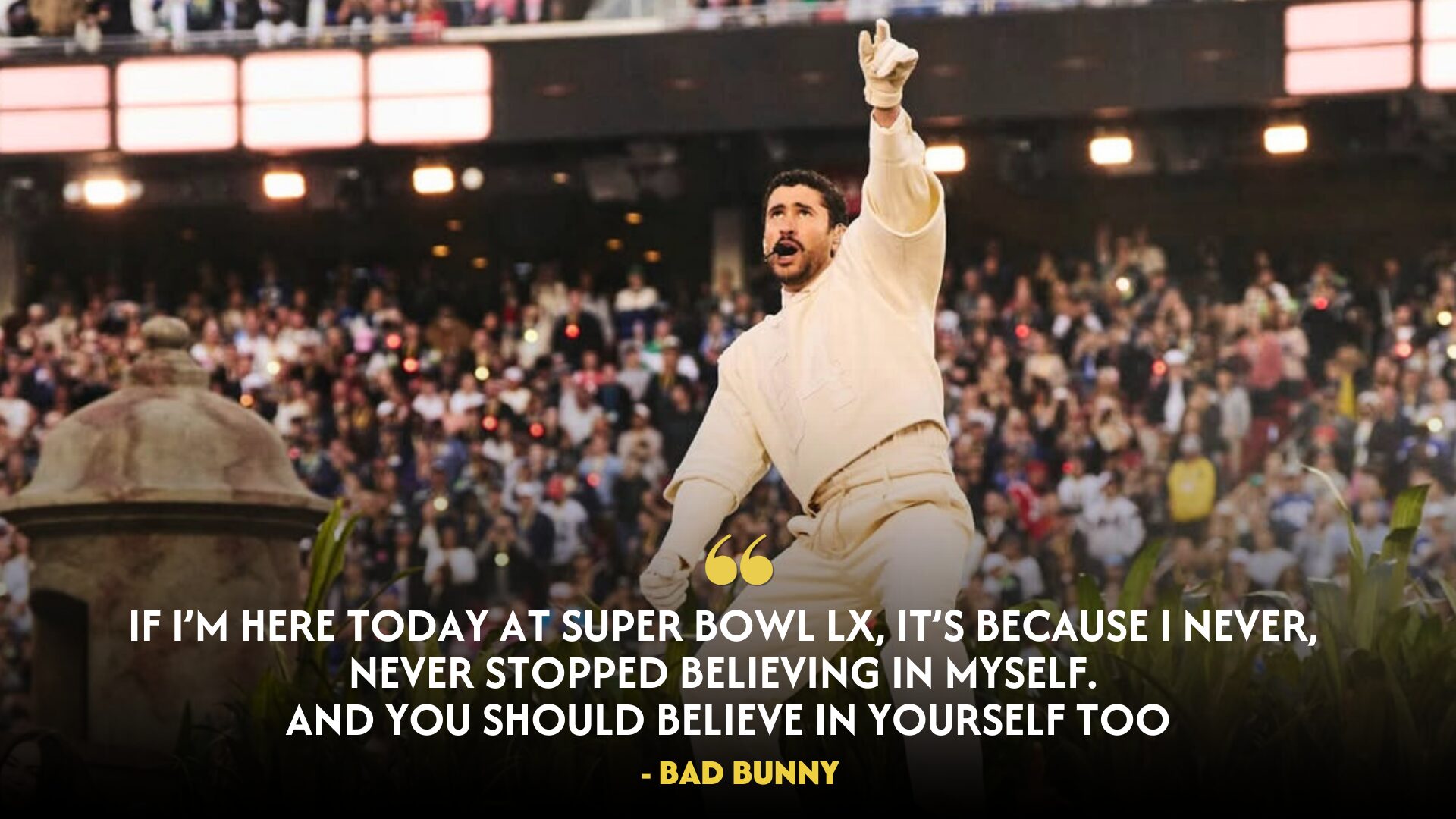
Photo Credit: Apple Music
Love and community soon became central themes when a real-life couple took center stage to get engaged, wed, and celebrate their union live during the broadcast, an emotional moment reportedly born after the newlyweds invited the artist to their wedding, only for Bad Bunny to return the gesture on the world’s largest stage. The celebration intensified during “Ella Perrea Sola,” when the field morphed into a glowing casita reminiscent of his Puerto Rico residency sets. Inside the home-like structure appeared a constellation of Latino stars: Karol G, Cardi B, Pedro Pascal, Jessica Alba, and more gathered as if at a family party. Introducing the song, Bad Bunny declared, “Para todas las mujeres en el mundo entero. Ella anda sin miedo” (For all the women in the entire world. She walks without fear). Underscoring the track’s message of independence, joy, and self-empowerment.
A brief interlude built around the chorus of “Gasolina”, paying tribute to other pioneers of the genre such as Daddy Yankee, Don Omar, Tego Calderon and brighning male dancers into close-contact choreography, a clear affirmation of LGBTQ+ visibility and inclusion. The mood shifted again as violinists swept across the stage and Bad Bunny paused to address the audience directly: “Si hoy estoy aquí en el Super Bowl LX, es porque nunca, nunca dejé de creer en mí. Y tú también deberías creer en ti.” (If I’m here today at Super Bowl LX, it’s because I never, never stopped believing in myself. And you should believe in yourself too).
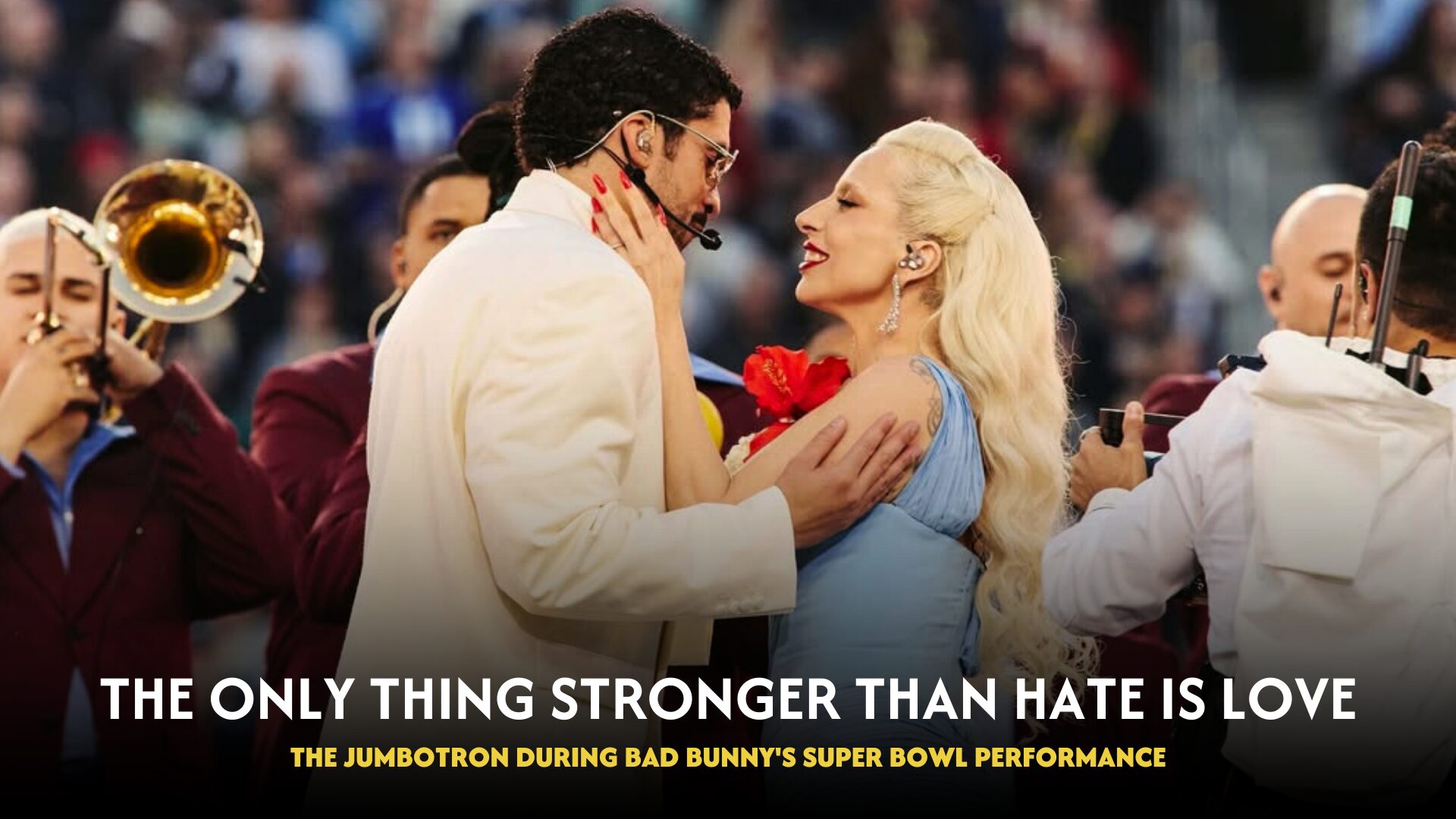
Photo Credit: Apple Music
One of the night’s most unexpected turns followed when Lady Gaga appeared, reworking her hit “Die With a Smile” through Puerto Rican rhythms backed by a live salsa ensemble. Wearing Puerto Rico’s national flower and draped in blue to honor the island first flag color, she danced alongside Bad Bunny before the pair transitioned seamlessly into “Baile Inolvidable,” turning the stadium into a swirling celebration of romance and rhythm. The storytelling extended beyond choreography: Bad Bunny gently roused a child asleep in the crowd, a wink to anyone who grew up drifting off at endless family parties before launching into “NuevaYol,” his love letter to New York’s multicultural neighborhoods.
Generational legacy became another focal point when a young fan appeared clutching Bad Bunny’s latest Grammy trophy while footage replayed the artist’s own acceptance speech, positioning the moment as a passing of the torch for future Latino musicians. That thread continued with the arrival of another Puerto Rican icon: Ricky Martin, who rose from a stage segment modeled after the cover of Debí Tirar Más Fotos to deliver a verse of “Lo Que Le Pasó a Hawaii,” uniting two eras of island stardom in a single frame.
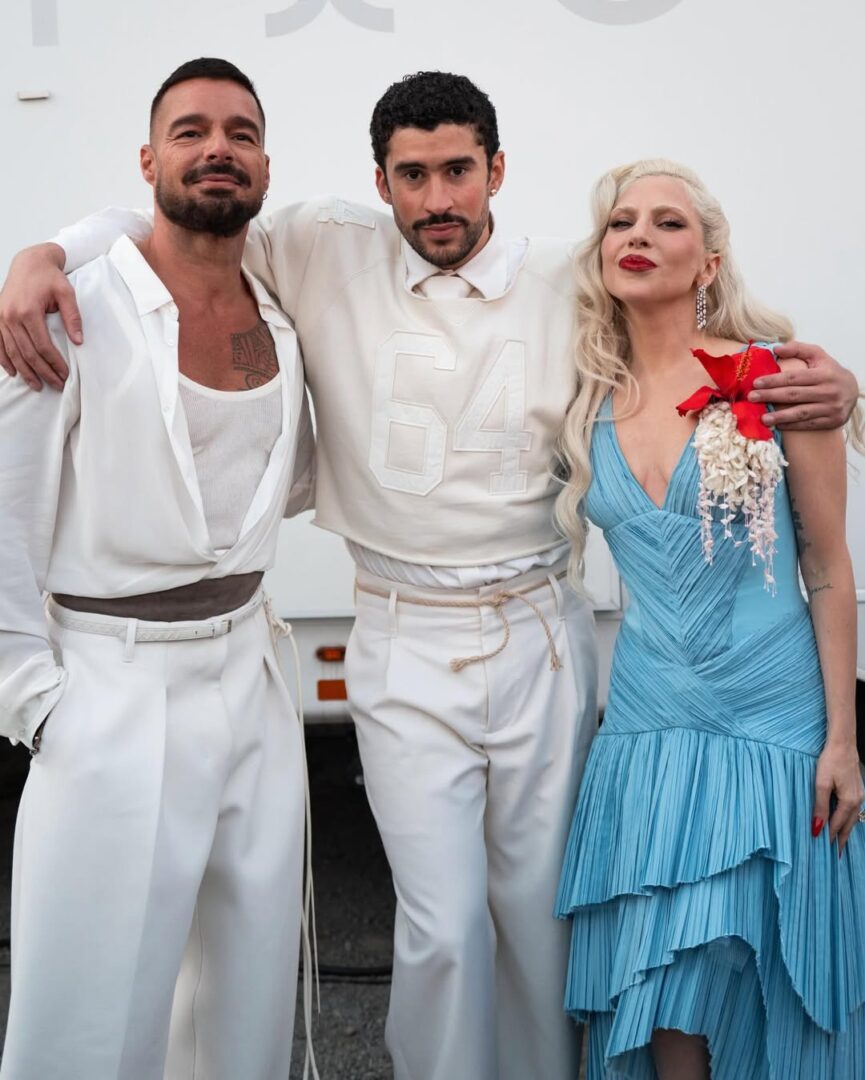
Photo Credit: Ricky Martin Facebook Page
The celebration sharpened into social critique during “Apagón,” highlighting power outages across Puerto Rico, displacement tied to privatization, and families pushed aside by luxury developments and private beaches. It was a sobering pivot that reminded viewers of the political stakes embedded throughout the spectacle. The tone lifted again with “Café con Ron,” as flags from across Latin America, Puerto Rico, the United States, and Canada filled the screens while Bad Bunny named countries one by one, reminding people who really is part of “America”. Above it all blazed the message: THE ONLY THING STRONGER THAN HATE IS LOVE.
“DTMF” closed the set in euphoric fashion before the artist ended the performance with three simple, resonant words: “Seguimos aquí.” We’re still here.
By the time the final note faded, Bad Bunny had delivered far more than a halftime show. What unfolded was a culture-driven performance, part street festival, part political testimony, part love story and woven with plena, salsa, reggaeton, and salsa into a 13-minute declaration of presence. Coming after a triumphant residency run and historic Grammy victories, the night marked the apex of a career built on refusing erasure. In drums and violins, domino games and wedding vows, protest footage and joyful dances, Bad Bunny reminded millions watching that music remains our most powerful platform, capable of crossing borders, confronting injustice, and uniting communities in a single, shared rhythm.