
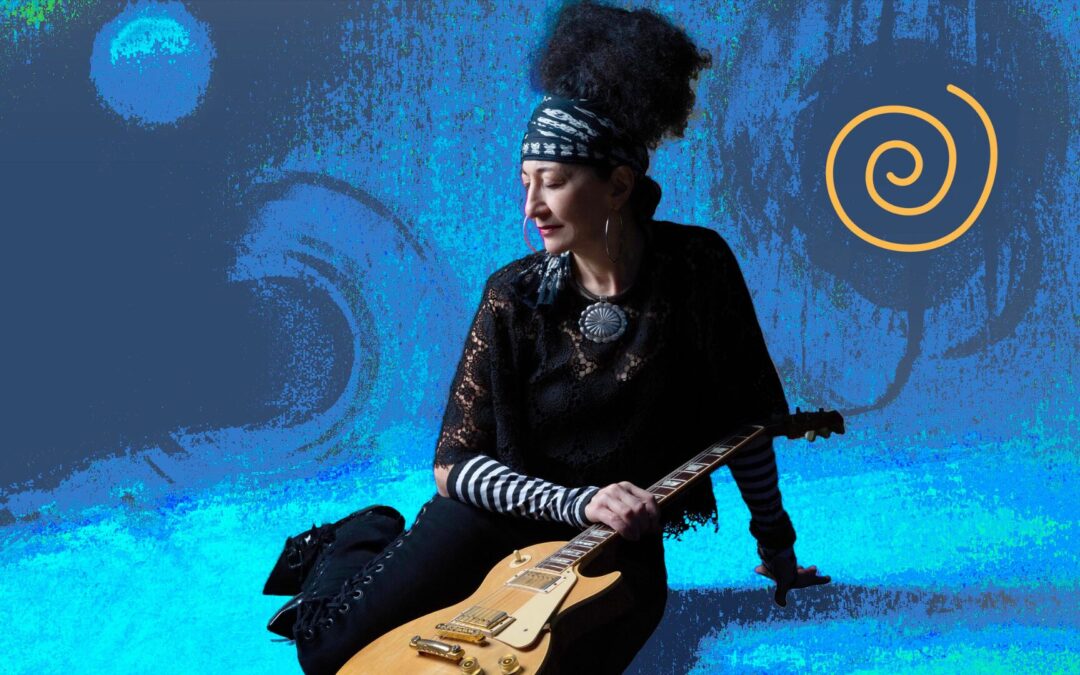
With her new album Así es el Mundo, Eljuri invites listeners into more than just a musical experience — she offers a call to empowerment. Recorded in an intimate farmhouse studio in upstate New York with longtime collaborators and world-class musicians like Cyro Baptista and Steve Sandberg, the album celebrates her roots while addressing urgent issues affecting communities worldwide.
Así es el Mundo is about self-empowerment: reclaiming your voice, remembering you’re not alone, and finding strength through music. “If you want to feel empowered, know that you have your own voice and the power within you, this album is for you,” said Eljuri.
Eljuri’s songwriting is fueled by activism and a desire to lift others up, drawing inspiration from social justice icons like Dolores Huerta and her own family. Beyond the music, she offers actionable resources with a musical component.
THE SOUND OF EMPOWERMENT: ELJURI ON AFRO-CARIBEAN RHYTHMS, SOCIAL JUSTICE, AND FINDING YOUR VOICE
In her new album Así es el Mundo, Eljuri fuses Latin rhythms, rock, reggae, flamenco, and Afro-Cuban influences to create a powerful musical statement on empowerment, social justice, and civic engagement, inviting listeners to reclaim their voices and take action alongside her.
CONGRATS ON THE NEW ALBUM ASÍ ES EL MUNDO. IS THERE A PARTICULAR SONG ON ASÍ ES EL MUNDO THAT YOU FEEL CAPTURES ITS SPIRIT?
Not really. Every song has its own vibe and energy. When I write my songs and I do all the arrangements, I do all that in my home studio as a multi-instrumentalist. Then certain songs don’t make the cut because it doesn’t suit the album.
YOUR MUSIC HAS ALWAYS CARRIED A MESSAGE OF SUPPORTING THE ENVIRONMENT, OF SOCIAL CHANGE, BUT THIS ALBUM FEELS ESPECIALLY URGENT. WHAT MOMENT SPARKED YOUR DESIRE TO MAKE A FULL ALBUM AND TO RELEASE IT IN SUCH CRITICAL TIME FOR OUR PEOPLE, OUR GENTE?
You’re one hundred percent correct. There’s an urgency like no other, very different than the urgency felt during my last record. I always have socially conscious lyrics, but right now, which side of history do people want to be on is really how urgent it is. Not that the world revolves around the US, but the impact of what’s going on in the US is unquestionably terrible, especially against immigrants.
We have a global impact on other countries, on neighboring countries especially. It’s unacceptable what’s going on, it’s a tragedy and we have to speak out now louder than the last record. Louder than ever before.
YOU’VE PROMOTED VOTER REGISTRATION THROUGH CONCERTS FOR DEMOCRACY. HOW DO THOSE EXPERIENCES INFLUENCE YOUR SONGWRITING?
I started writing the songs during my last tour when I was trying to get the vote out. We worked with HeadCount to spread the vote and I actually helped them convert materials to Spanish, so that we can encourage the Latino vote and take the fear and confusion away from voting. And yes, during that time it was seeping in my head these ideas of the songs. I started writing the songs before the elections last year, and then I was like, “oh, my God, we have to record this like now”. So my team of people that I’m very fortunate to have, got together and recorded in March through June. We’ve been touring all summer in support of the record.
WHY IS IT IMPORTANT FOR ARTISTS, FOR MUSICIANS TO USE THEIR PLATFORM FOR GOOD?
Every musician is different but I grew up with a great example: My mother. She is a songwriter and was my first example. She wrote a song about peace. I also admire Bob Marley and Marvin Gaye’s What’s Going On album.
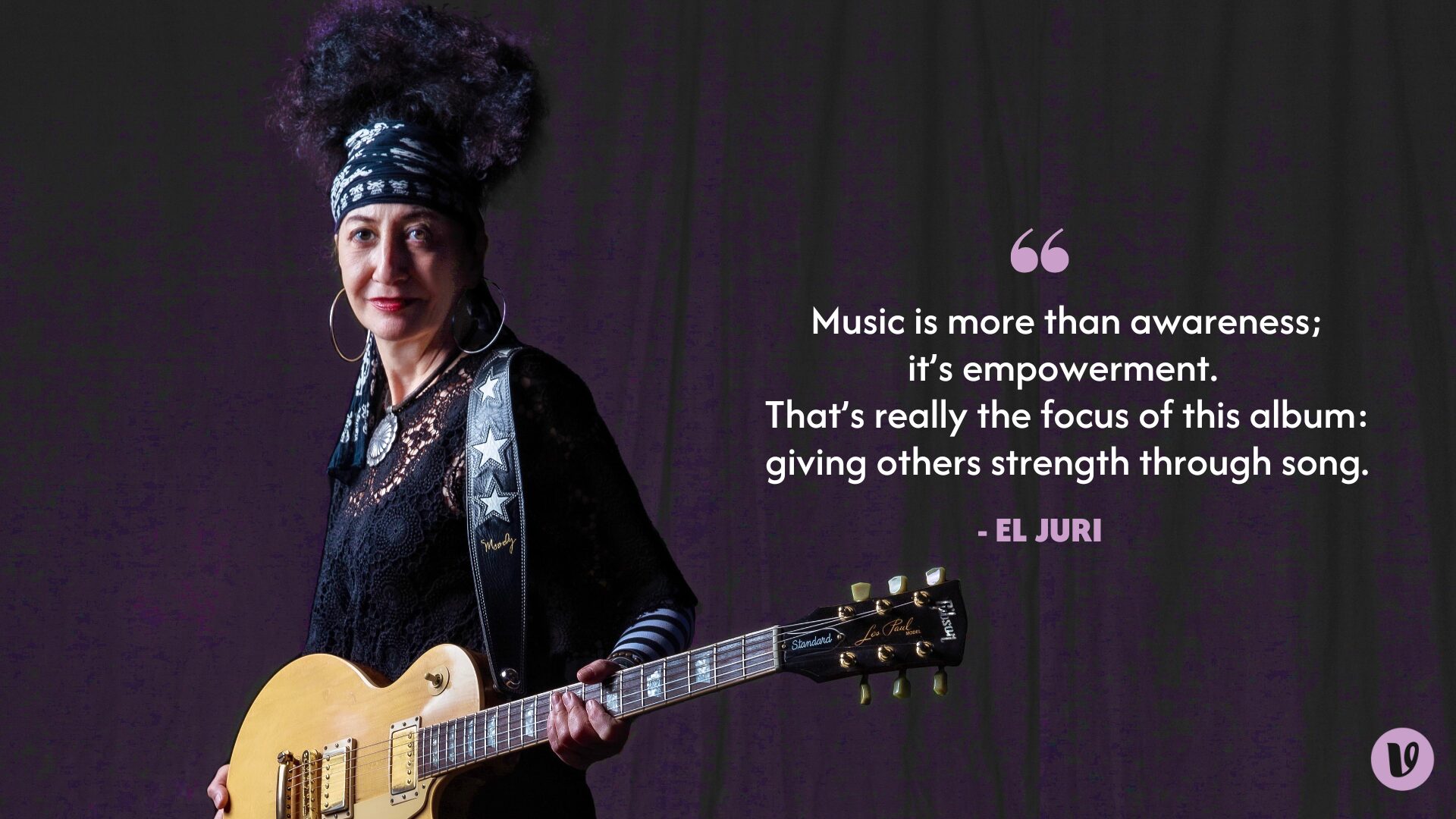
Also, people like Gandhi, Dolores Huerta and all these unbelievable people. It just became a natural way to write songs. It is more than awareness, it’s an empowerment thing, which is really the focus of this album: Empowerment through music.
THESE SOCIAL JUSTICE ICONS, LIKE DOLORES HUERTA, EMPOWER YOU TO WRITE THIS ALBUM?
Yes. When I think of what she’s lived through and accomplished, it’s inspiring. She lifts us up, and I want to do the same — to lift others up while also being lifted myself. We need each other, and we need to expand our tent. We are examples.
I was touring in Canada, and I thought: I’m an immigrant from the U.S., I’m Latina — I’m not the horrible person some make us out to be. My drummer is from Colombia, my bassist is Black, and the Canadians were cheering for us. That’s what we have to do: offset the negative narratives. I have a voice as a musician, singer, and songwriter. I’m lucky in that sense, but it’s also on us to give others a lift too.
ONE OF THE THINGS YOU CONTINUE TO HIGHLIGHT IS THE PEOPLE BEHIND THE ALBUM, LIKE ROYE AND ALEX ALEXANDER. HOW WAS THAT COLLABORATION FOR “ASÍ ES EL MUNDO”?
Winston, Roy, and Alex — they’ve been with me for over ten years. They’re my core. That’s the power trio that travels with me. We had some wonderful guests on the record, along with great engineers and co-producers.
For example, Cyro Baptista, the great Brazilian percussionist — I’m sure you’ve heard of him — plays on several tracks. He added percussion to the more samba-fusion pieces and to some of the Brazilian-inspired songs.
And Steve Sandberg, whom I’ve known forever in New York, is also on the record. He’s played with Rubén Blades, Celia Cruz, and so many legendary artists. His montunos on piano really complement the montunos I play on guitar, so together we kind of dance through the songs. He’s magnificent.
I feel very lucky to work with people who truly understand my vision — this fusion sound that isn’t straight-up anything, but has become my signature.
LET’S TALK A BIT ABOUT THE RHYTHMS BEHIND THE SONGS. I LOVE THAT YOU ARE CELEBRATING YOUR ROOTS, I HEAR RUMBA, FLAMENCO WITH REGGAE, SOME FUNK, AND ROCK?
Absolutely. There’s a root of flamenco in the way I play acoustic guitar — especially on my twelve-string. I grew up listening to Afro-Cuban, flamenco, tangos, boleros, valses, pasillos — all of that at home, thanks to my wonderful parents.
At the same time, I was growing up in the rock clubs of New York, playing electric guitar at seventeen at CBGB’s and performing alongside incredible reggae musicians. In New York, you learn from the best — something’s bound to seep in.
IS THERE A PARTICULAR INSTRUMENT THAT HAS A SPECIAL MEANING TO YOU?
I was really into the Cuban tres, which is an acoustic instrument — usually six or nine strings — and it’s great for playing montunos. Since I also play a lot of Gibson and D’Angelico guitars (I’m sponsored by them), I told my luthier I wanted an electric version. So he built me an electric tres.
You can actually hear it on Karma — the solo isn’t on an electric guitar, it’s on the electric tres. Musicians might especially notice the difference, because it has a unique sonic quality. It’s a really cool instrument.
“ASÍ ES EL MUNDO” REMINDS US THE POWER IS WITHIN
Así es el Mundo is now available on all streaming platforms, accompanied by brand-new videos and a behind-the-scenes look at its creation.
Beyond the songs, Eljuri and her team have created a free Activism Toolkit, designed to help fans learn more about issues like women’s rights, climate change, and civic engagement. Accessible on her website, the toolkit is a practical way to transform her music into action and calls on us to listen, engage, and step forward together.
PHOTO CREDIT: MANOVILL RECORDS