


Celebrated Peruvian actor, singer-songwriter, and longtime Latin icon Christian Meier has spent decades shaping his artistic legacy across both music and television, earning recognition throughout Latin America for his work as a performer, composer, and one of Peru’s most recognizable cultural figures. Now based in Los Angeles, Meier returns to music with Así Es La Ley, a project that finds him creating from a place of complete artistic freedom and creative maturity. Entirely written by Meier, the nine-track record marks his sixth solo studio album and reaffirms what has always defined his artistry: songs born directly from his own voice, perspective, and emotional truth.
Produced in Los Angeles by Grammy-winning producer Gustavo Borner, known for his celebrated work with Andrés Calamaro and Fito Páez. Así Es La Ley embraces an organic, performance-driven sound rooted in the purest essence of rock. The release is elevated by an innovative five-chapter audiovisual series, each directed by Meier and filmed in a single take, seamlessly connecting one story to the next, further cementing this era as his most cinematic, expanding his creative legacy from Los Angeles to audiences around the world.
“ASÍ ES LA LEY” IS MEIER’S NEW ROCK CHAPTER BROUGHT TO LIFE BY A CINEMATIC VISUAL UNIVERSE
- It was incredible to watch the costume changes, production shifts, set transformations, and that striking California desert backdrop unfold in real time, almost like a cinematic sequence in the style of Alfonso Cuarón. What was the process like behind creating something so ambitious, and how challenging was it to pull off?
When we made the album, Así Es La Ley, even before it was fully recorded and before releasing the first single, we already knew which five songs would be the singles out of the album’s nine tracks.
Each video was filmed in one uninterrupted shot, and when one ended, the next one picked up the story and took you through another three or four minutes of this journey, this character, who is me, moving from one place to another.
When you finally watch all five together, you realize it’s one full day: I wake up in the morning, go through this entire journey, and eventually return home at night, where there’s a stage waiting for me so I can finally perform Así Es La Ley with my band.
We filmed it about three and a half hours north of Los Angeles, past the Mojave Desert, in a town called Lone Pine on the way to Nevada.
It’s a beautiful place because it feels part desert, part Midwest, and then behind it all you have snow-covered mountains, so visually, it has everything.
- These songs explore heartbreak and disillusionment, but there are also brighter, romantic moments like Par con Tres and Crímenes Perfectos. How did you find that emotional balance across the album, and how much of your own story lives inside these songs?
Par con Tres is an unusual story. It’s about someone caught between two people, trying to make a “pair” out of three. There’s a card-game metaphor running through it, where you’re constantly betting, trying to play pairs or trios, believing your future depends on somehow pulling three winning cards or finding a winning pair.
Crímenes Perfectos is more of a seduction game. To me, the “perfect crime” is seducing someone without ever seeing yourself as the victim. But in seduction, both people are always trying not to be the victim, they both want to be the criminal, in a way.
So yes, all these songs have some of that tension.
Así Es La Ley is a revenge story. It’s about betrayal. That’s why it says, “I gave you everything in life, and in return you struck me and left me with the wound, and all the plans we carried inside a briefcase we never got to use.”
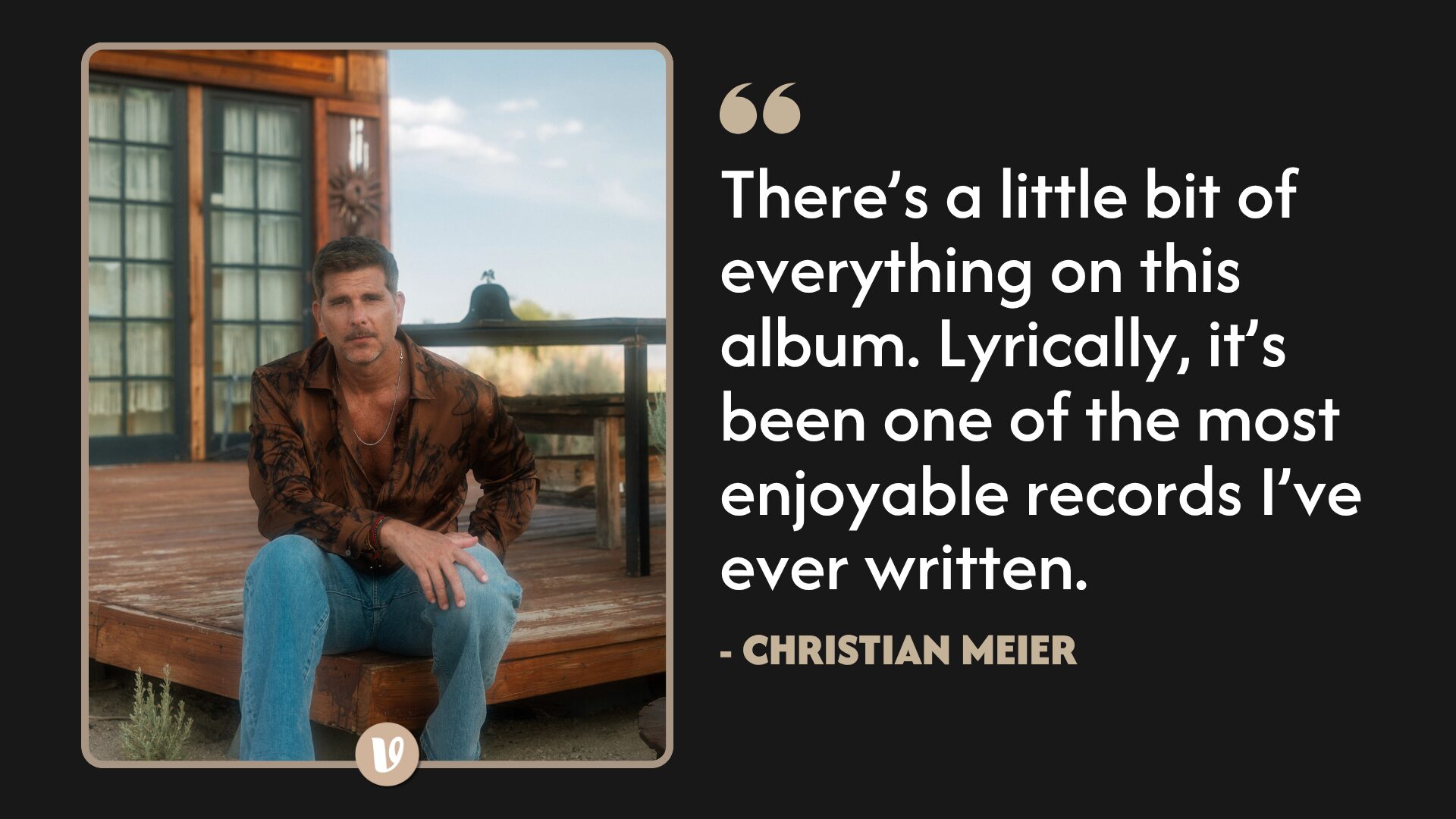
There’s a little bit of everything on this album. Lyrically, it’s been one of the most enjoyable records I’ve ever written.
- You worked with Gustavo Borner and an incredible team of musicians to bring this project to life. How did you manage to honor your musical essence while also evolving it within Así Es La Ley?
Gustavo was an inspiration I didn’t even know existed. I’ve always loved Spanish-language pop-rock. I listen to Andrés Calamaro, Fito Páez, and so many others. And I kept asking myself: Why are their recent albums so good? Why are they so successful? Why do they keep winning Grammys for Best Rock Album? So I started digging into who was producing these records, and that’s when I discovered Gustavo.
That gave me so much peace of mind, because I already had the songs, and now I had the person who knew exactly what ingredients and formula would make them sound the way they needed to. He made suggestions, adding bridges, extending choruses by eight bars, helping elevate what was already there.
He took what I had and made it much bigger through his knowledge and experience.
- You’ve also hinted that international dates are coming soon. Can we expect key U.S. cities or even Mexican border markets, or is it still a surprise?
We’re definitely putting together a schedule. There’s a proposal for a small East Coast / West Coast run, some California dates, and others around New York and Miami.
Then in early June, I’ll have an official presentation in Miami for the media, friends, and people from the music industry.
- Your collaborations with Mikel Erentxun left a lasting mark on your fans. Could we ever see another collab, or maybe even a surprise live performance together?
I never say never. But Mikel and I have already collaborated twice. The first was on my album Once Noches back in 2002 or 2003, on a song called Novia de Nadie. Then a few years ago we recorded Déjà Vu together. Because of the title, we included footage of us from twenty years earlier recording our first collaboration, so there was this literal déjà vu of us in the studio doing the same thing again.
Mikel was a huge inspiration to me. In the ‘80s, when I was first becoming interested in music, Duncan Dhu had a massive impact across Latin America, especially in Peru, where I was living. They were one of the bands that inspired me and my friends to start our own rock band.
We were shaped by artists like Duncan Dhu, Hombres G, Nacha Pop, Danza Invisible, Soda Stereo, all of that incredible music that still lives on today.
- Beyond music, your new film Mistura just premiered in California, where you star alongside Bárbara Mori in an empowering story set in 1960s Lima. What has it been like walking simultaneously between acting and music?
It’s been good. When I first started my career, music came first. Acting happened by chance. At the beginning I was doing both, but eventually I landed an acting role that made me very well-known and suddenly demanded all of my time.
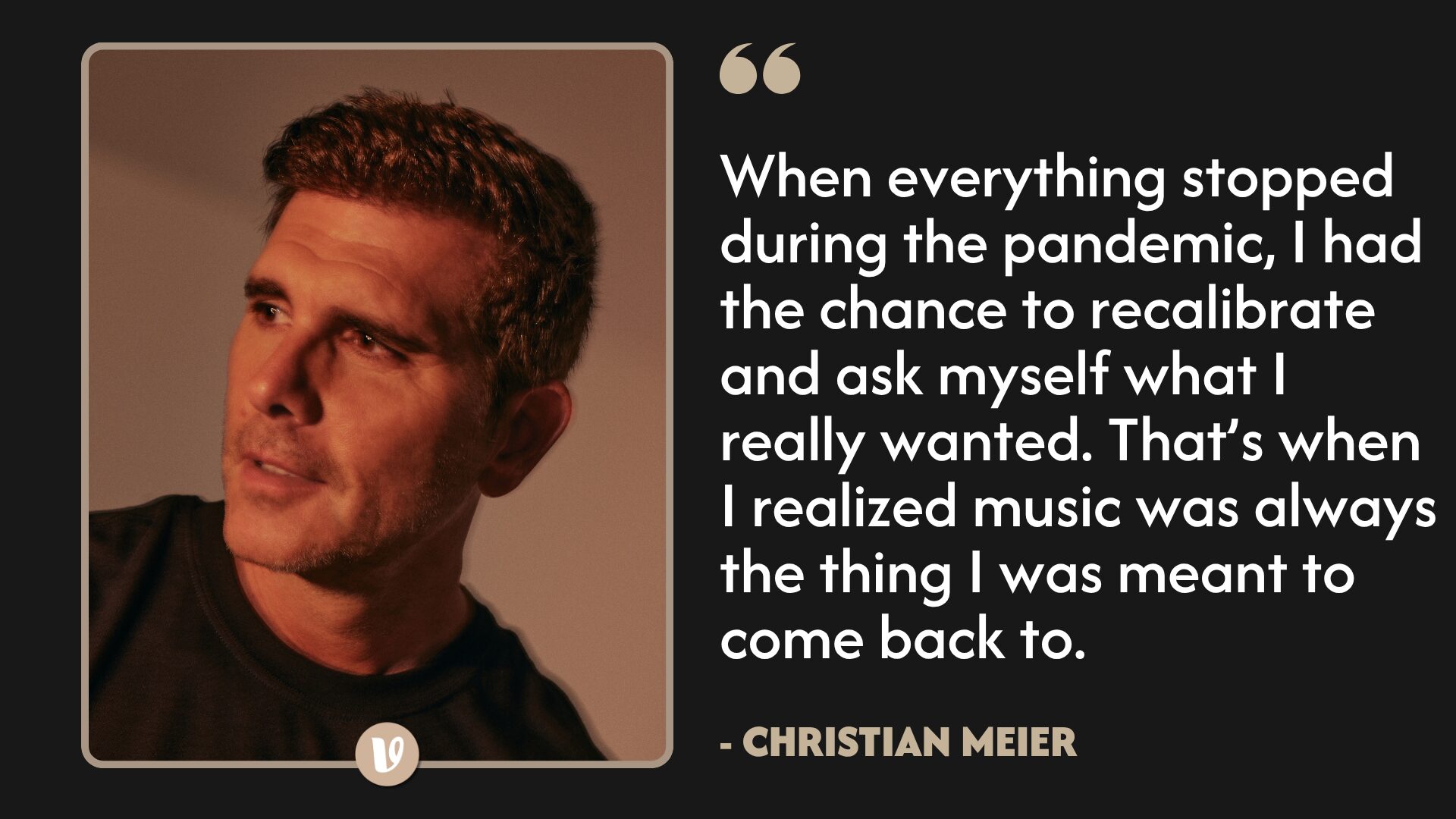
The offers kept coming, and music had to pause while I focused fully on acting. It became a snowball that never really stopped rolling. Then the pandemic hit in 2020, and everything came to a halt. That pause gave me the chance to reflect and recalibrate.
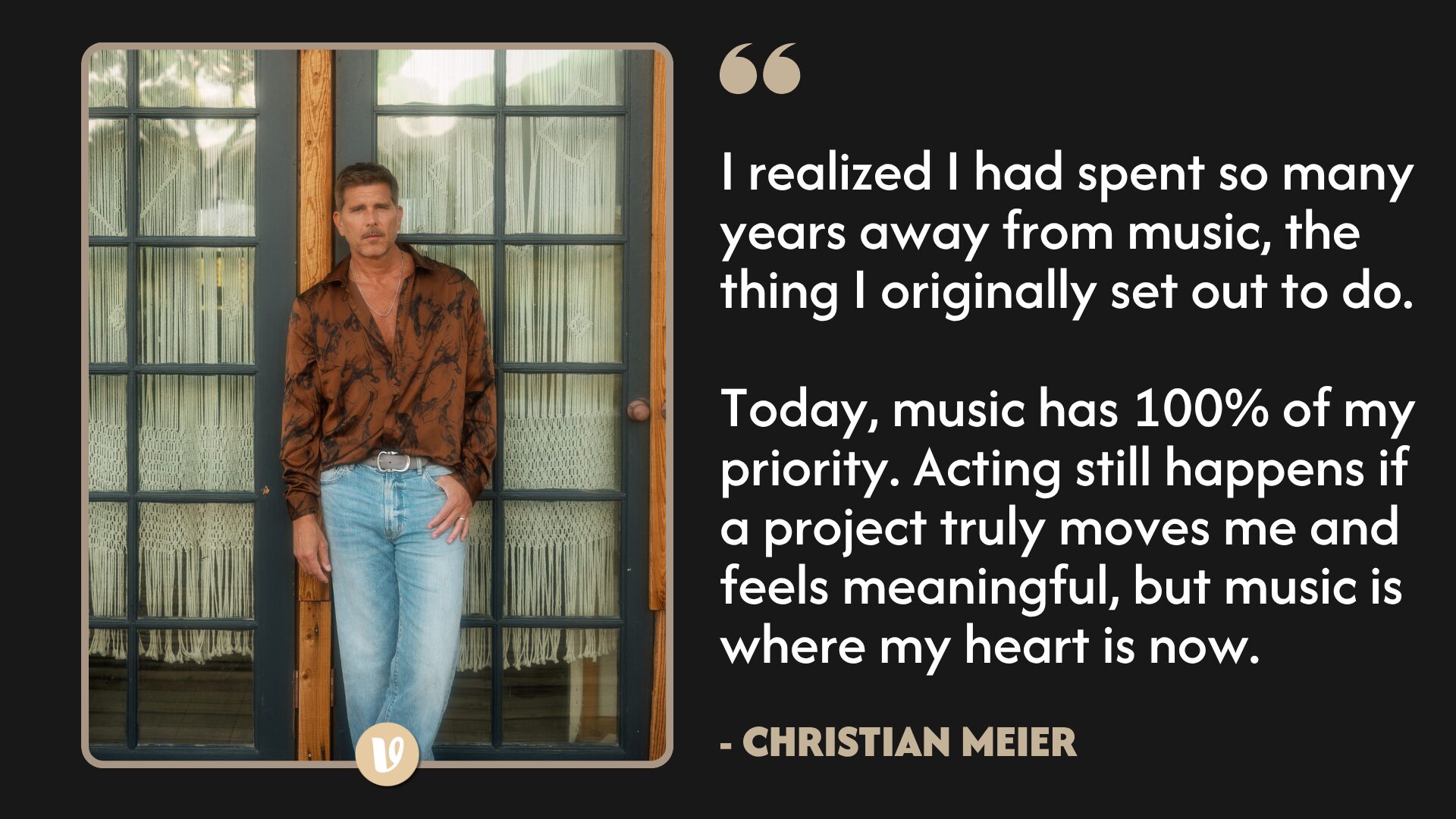
I realized I had spent so many years away from music, the thing I originally set out to do. So I decided to start over. And if I was going to start over, I wanted to do it through music. Today, music has 100% of my priority.
Acting still happens if a project truly moves me and feels meaningful, but music is where my heart is now.
A LIGHTNING ROUND WITH CHRISTIAN MEIER ON SOUND, STAGE, AND STARTING OVER
Favorite instrument?
This guitar right here, a 1952 Fender reissue. I bought it 30 years ago, so it’s definitely my favorite instrument.
A dream venue you’d love to play one day?
The Hollywood Bowl
A studio snack you couldn’t live without while writing?
Two bowls of M&M’s, one peanut, one chocolate.
One thing that can never be missing from your suitcase?
My harmonicas, my nebulizer for vocal steam exercises, my tuner, and a really good pair of headphones.
What song should new listeners hear first to truly understand Christian Meier today?
Definitely Así Es La Ley. It’s not a coincidence that it opens the album.
It kicks the door down, it makes a statement. Not just because it shares the album title, but because it says exactly who I am and what listeners should expect from here on out.
MUSICAL VISION FOR THE FUTURE
With Así Es La Ley, Christian Meier proves that reinvention doesn’t mean leaving your roots behind, it means returning to them with greater clarity and purpose. From the cinematic ambition of his interconnected visual chapters to the emotional depth woven throughout each lyric, Meier embraces this new era with the confidence of an artist who knows exactly where he’s headed. Whether reflecting on heartbreak, desire, betrayal, or renewal, he delivers a body of work that feels both deeply personal and universally resonant.
As Meier prepares for international stages and continues balancing music with selective acting projects, this album marks the beginning of an exciting new chapter. Así Es La Ley is now available on all streaming platforms, listen now and experience the full journey from beginning to end.
Photo Credit: Courtesy of 11:11 Public Relations